
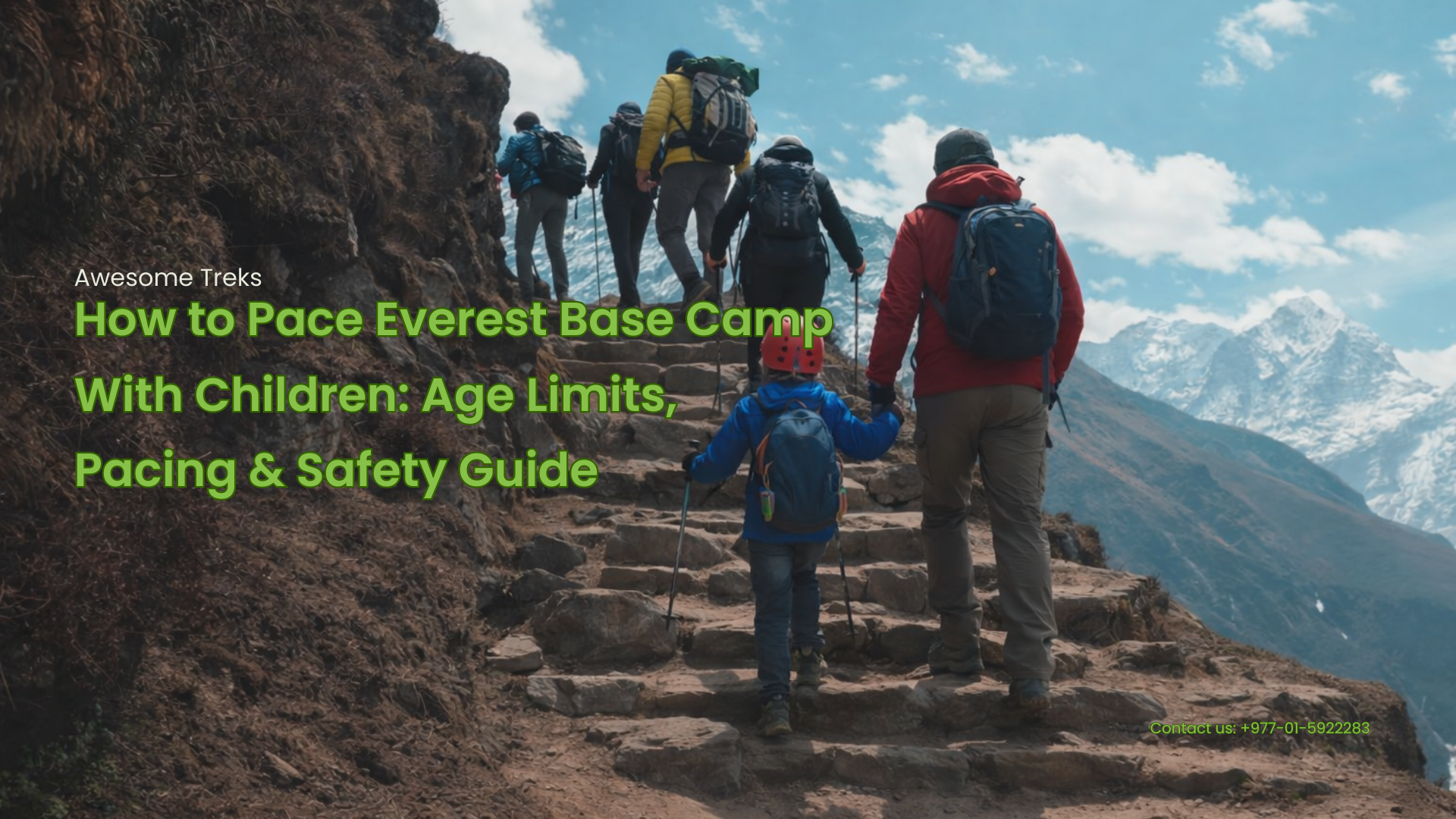
Taking kids to Everest Base Camp usually gets one of two reactions. Either people are impr essed, or they think it sounds completely unrealistic. Too high, too cold, too demanding.
The truth sits somewhere in the middle.
The Everest Base Camp trek with kids is possible, but only when it is planned differently from a standard adult itinerary. The mountain does not need to be conquered. It needs to be approached slowly, calmly, and with flexibility. When families get that part right, the trek becomes challenging in a good way rather than overwhelming.
This guide focuses on how to pace Everest Base Camp with children, what age actually works best, and how to manage safety, comfort, and daily energy without turning the trek into a forced march.
A Kid-Friendly EBC Rhythm
Pacing an Everest Base Camp trek with children comes down to three things: shorter walking days, extra acclimatisation time, and zero pressure to follow fixed group schedules.
Most families do best with four to five hours of walking per day, especially after Namche Bazaar. This usually means starting after breakfast, walking for a couple of hours, stopping for lunch, then finishing the day by early afternoon. Ending early gives children time to rest, warm up, eat properly, and recover.
Rushing never helps at altitude. Children feel fatigue earlier than adults, and once energy drops, motivation follows quickly. A slower pace keeps spirits steady and reduces altitude-related risks without making the trek feel boring.
If there is one rule families should follow, it is this: never speed up just because the trail feels easy.
Is Everest Base Camp Suitable for Kids?
There is no official minimum age set by Nepal authorities for the Everest Base Camp trek. Whether it works or not depends far more on the child than the number written on a passport.
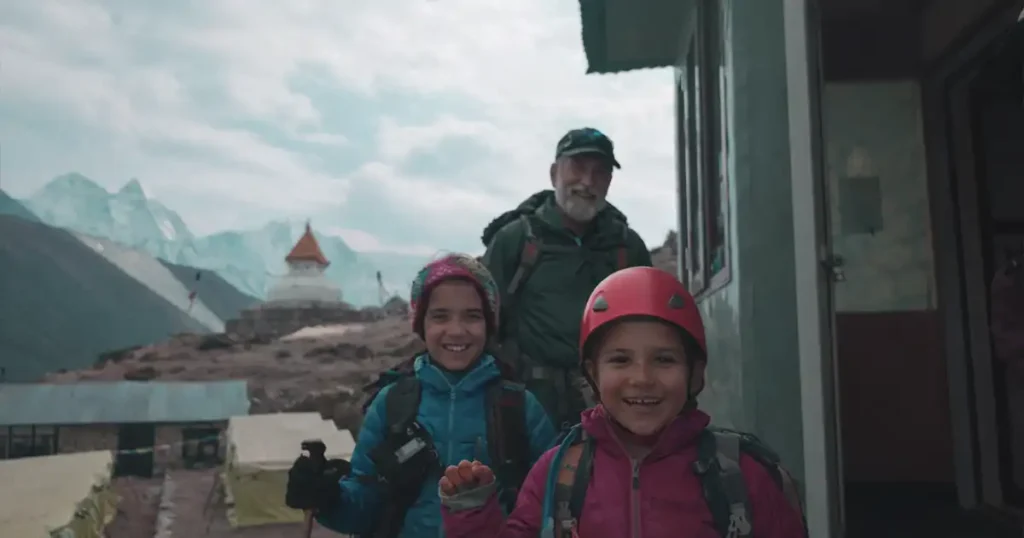
The best age for Everest Base Camp trek is usually when a child can:
- Walk steadily for several hours
- Speak up when something feels wrong
- Follow daily routines without resistance
For many families, this falls between 10 and 15 years old. That said, younger children have completed the trek on carefully paced itineraries, while some teenagers struggle because they are unprepared or uninterested.
A child who already enjoys hiking, camping, or long walks will adapt far better than one who is new to physical routines. Attitude matters more than strength.
Pacing, Walking Hours & Daily Rhythm on the Trail
Trekking with kids in Nepal works best when the day stays predictable and ends early enough for warm food, rest, and recovery.
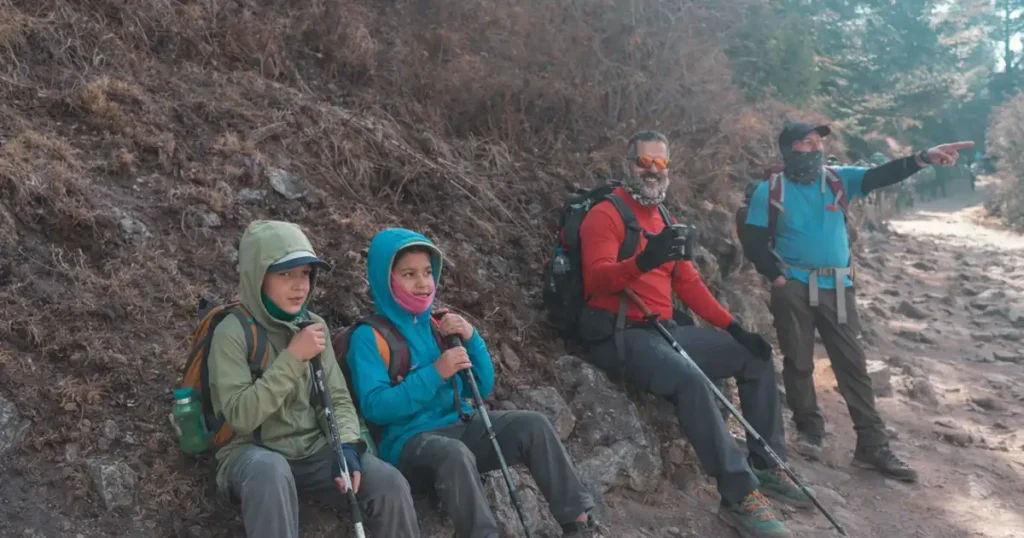
Kids do well with a simple rhythm breakfast, walk, tea stop, lunch, walk again, arrive early and that consistency helps the body adapt while keeping mental fatigue low.
If you are wondering how to pace Everest Base Camp with children, the simplest approach is short days, a steady routine, and extra acclimatisation before anyone looks tired.
Four to five walking hours is plenty at altitude (especially above 3,500 m), and slower days leave room for snack breaks and small moments that keep kids engaged.
That is why extra acclimatisation days are not optional for families they are what makes the journey sustainable.
Trekking With Kids in Nepal
Many parents expect constant difficulty. In reality, trekking with kids in Nepal often feels surprisingly social and supportive.
The Everest trail is busy but friendly. Porters, guides, lodge owners, and fellow trekkers often interact with children along the way. Small conversations, smiles, and encouragement help kids feel part of the journey rather than dragged along.
Teahouses offer simple meals, warm dining rooms, and early nights. The lack of distractions actually helps. Days feel purposeful, and routines settle in quickly.
Of course, not every day is easy. Some mornings feel cold. Some climbs feel long. The difference is that kids cope better when there is no pressure to “perform”.
Comfort on the Trail: Warmth, Clothing & Foot Care
For children, comfort decides everything. Cold feet, wet clothes, or sore boots can turn a good day into a miserable one very fast.
Keeping Kids Warm on Everest Base Camp Trek
Children lose heat faster than adults, especially in the evenings and early mornings. Keeping kids warm on Everest Base Camp trek is mostly about layering and timing, not extreme gear.
Dry base layers, insulated jackets, gloves, and warm socks make a noticeable difference. Changing clothes as soon as the day ends and eating warm meals early helps kids recover overnight instead of staying cold and restless.
Kids Trekking Boots and Blister Prevention
Foot problems are one of the most common reasons families struggle.
Kids trekking boots should be properly fitted and broken in well before arriving in Nepal. New boots on the trail almost always lead to blisters. Once feet hurt, motivation drops quickly.
Blister prevention is simple but important:
- Good socks, not cotton
- Daily foot checks
- Treating hot spots immediately
Small issues handled early prevent bigger problems later.
Packing & Medical Basics for Families
Packing for children is not about carrying more. It is about carrying the right things.
Family Packing List for Everest Base Camp Trek
A practical family packing list for Everest Base Camp trek focuses on warmth, familiarity, and comfort. Extra layers matter more than gadgets. Familiar snacks help on low-energy days. One small comfort item can improve sleep more than any piece of gear.
Keeping packs organised also helps children feel involved and responsible without being overwhelmed.
Medical Kit Essentials for Trekking With Children
Medical kit essentials for trekking with children should cover basic needs rather than worst-case scenarios.

A good kit includes:
- Child-appropriate pain relief
- Rehydration salts
- Blister care
- Any personal medication
The goal is early response. Treating small headaches, fatigue, or dehydration quickly keeps the trek moving smoothly.
Acclimatisation, Rest Days & Safety
Acclimatisation is what keeps an Everest Base Camp trek with children safe and enjoyable. Give the body time to adjust and everything else energy, appetite, mood stays more stable. Any realistic approach to how to pace Everest Base Camp with children treats acclimatisation as a safety tool, not a delay.
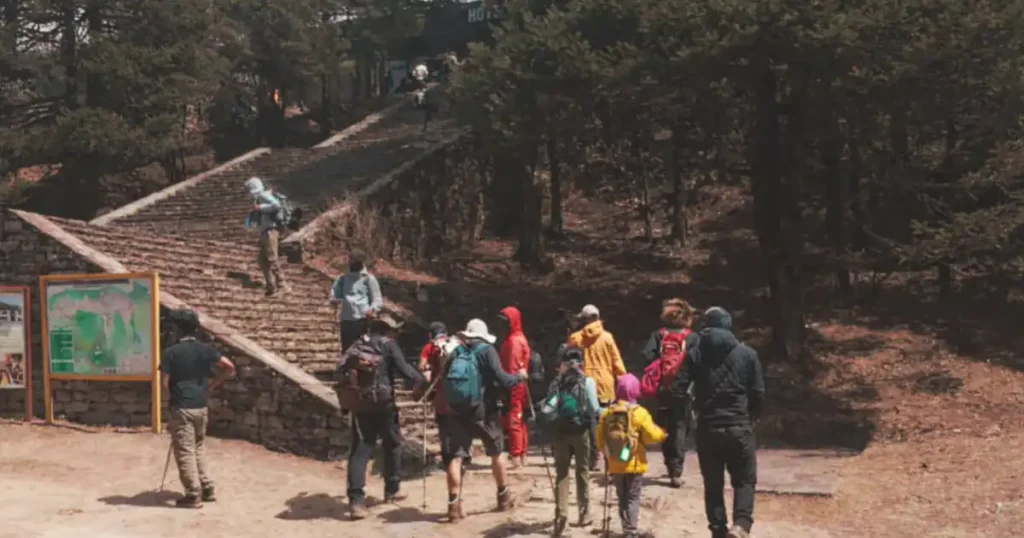
Rest Day Ideas in Namche for Families
Namche Bazaar is the most important acclimatisation stop on the trek.
Good rest day ideas in Namche for families involve light movement rather than complete rest. Short walks above town, viewpoints, and casual bakery visits help the body adjust while keeping kids mentally active.
Sitting still all day often makes children restless and does not improve acclimatisation.
EBC Trek With Kids Safety Checklist
A realistic EBC trek with kids safety checklist includes:
- Slow ascent
- Regular hydration
- Honest daily check-ins
- Willingness to change plans
Altitude sickness does not care about schedules. If a child feels unwell, the day adjusts. Safety always outweighs distance or goals.
Guides, Custom Routes & Family Planning
Families benefit most from flexibility, not speed.
A private EBC trek for families allows pacing to match the child, not the group. Extra rest days can be added. Shorter days can be planned without stress.
When you customize Everest Base Camp trek for kids, the pressure disappears. Children sense that flexibility and respond better both physically and mentally.
It is strongly recommended to hire a guide for kids Everest trek. An experienced guide watches behaviour, appetite, sleep quality, and energy levels. These signs matter more than altitude numbers alone.
Should You Book a Family EBC Trek?
If your family enjoys walking together and values shared effort, the experience can be deeply rewarding.
When families book family Everest Base Camp trek itineraries that prioritise pacing, comfort, and flexibility, the journey becomes about presence rather than achievement. Children often remember the routines, conversations, and sense of accomplishment long after the trek ends.
Everest Base Camp with kids works when expectations stay realistic and the mountain is approached with patience.
Little Trekkers, Lifetime Stories
The Everest Base Camp trek with kids is not about proving capability. It is about moving together, listening carefully, and allowing the journey to unfold at its own pace.
When done right, it becomes less about reaching Base Camp and more about everything that happens along the way.
Make the trail a family tradition and bring the kids.
FAQs
Is there an official minimum age for trekking to Everest Base Camp in Nepal?
No. Nepal has no legal minimum age for EBC. There is no rulebook at immigration or on the trail that says a child cannot go.
If there is no official minimum age, why do agencies still set “minimum ages”?
Agencies do this for risk management, not law. It helps them filter families who are not ready for altitude pacing, cold nights, or flexible planning.
What matters more than age for EBC with kids?
Communication, recovery, and stamina. A child who can say how they feel, recover overnight, and walk steadily beats a “fit” child who stays silent when unwell.
What altitude is Everest Base Camp (South Base Camp in Nepal)?
Everest Base Camp (Nepal side) sits at 5,364 m. It is high enough that pacing and acclimatisation matter more than fitness.
At what altitude does altitude illness risk start to increase for travellers?
Risk increases noticeably above 2,750–3,000 m, which is why families need to slow down well before Namche.
What is the “sleeping altitude” rule parents should follow above 2,750–3,000 m?
Climb high during the day, sleep lower whenever possible. Sleeping altitude is what stresses the body, not how high you walked.
How many acclimatisation days should a family plan for a standard EBC itinerary?
At least two full acclimatisation days, usually one in Namche and one in Dingboche. More is better if time allows.
Where are the classic acclimatisation stops on the EBC route?
Namche Bazaar (3,440 m) and Dingboche (4,410 m). These are non-negotiable stops for families.
How many walking hours per day is realistic with children on EBC?
Four to five hours is the sweet spot. Longer days drain energy and increase altitude stress without adding benefit.
What is the biggest pacing mistake families make in the first 3 days?
Walking too far because the trail feels easy. Early overconfidence causes problems later, especially after Namche.
Can children get altitude sickness even if they are fit?
Yes. Altitude sickness has nothing to do with fitness. Kids and adults react differently, regardless of training.
Are altitude sickness symptoms harder to recognise in children? Why?
Yes. Kids often do not explain symptoms clearly. Fatigue, silence, or mood changes can be warning signs.
What are common early warning signs of altitude problems in children?
Persistent headache, loss of appetite, nausea, poor sleep, unusual tiredness, or behaviour changes.
What should parents do if a child develops a headache at altitude?
Stop, hydrate, rest, and do not ascend that day. If it does not improve, stay put or descend.
What should parents do if a child vomits at altitude?
Treat it seriously. Vomiting is a red flag. Rest, hydrate, and descend if it continues.
When is it safer to take a rest day instead of continuing upward?
Any time symptoms linger overnight. If recovery does not happen with rest, the plan pauses.
When do you need to descend, even if you “paid for the trek”?
When symptoms worsen, persist, or affect walking and appetite. Money does not beat oxygen.
Can cold symptoms be confused with altitude illness symptoms?
Yes. Cold, dehydration, and altitude overlap. That is why warmth, fluids, and sleep matter so much.
Why does poor sleep often make the next day’s altitude symptoms worse?
Sleep is when acclimatisation happens. Poor sleep equals poorer recovery and higher symptom risk.
How do you prevent dehydration in kids on the EBC trail?
Warm drinks, soups, frequent small sips, and reminders. Kids rarely drink enough on their own.
How do you manage appetite loss in children at altitude?
Small portions, familiar foods, snacks, and no pressure. Eating something is better than eating “perfect”.
What foods are usually available in teahouses that suit children?
Pasta, fried rice, pancakes, soups, eggs, potatoes, porridge, momos. Simple and predictable.
How cold can nights feel on the EBC trek, and how does that affect pacing?
Nights can feel well below freezing higher up. Cold nights mean slower mornings and shorter walking days.
What sleeping system helps children recover better?
Layered clothing, a -10 °C sleeping bag, and a liner. Warm sleep equals better acclimatisation.
Should children carry their own backpack on EBC?
Yes, lightly. About 10% of body weight max. Water bottle, snack, jacket only.
Do kids need the same trekking permits as adults?
Yes. TIMS and national park permits apply to children as well.
Are there any fee exemptions for young children in Nepal’s protected areas?
Some parks offer reduced fees for very young children, but policies change. Assume permits are required.
What documents might families need for minors?
Passports, visas, birth certificate copy, and consent letter if one parent is absent.
How do Lukla flight delays affect a child-safe itinerary?
Delays mean longer waits and uncertainty. Kids handle this better when buffer days exist.
How many buffer days should families add for safety and logistics?
At least two extra days, ideally three. Buffers reduce stress and rushed decisions.
Is EBC safer in spring or autumn for children?
Spring and autumn are both suitable. Autumn has clearer skies, spring is slightly warmer.
What are practical “morning and evening checks” parents can do?
Ask about headache, appetite, sleep, energy, mood. Watch walking speed and engagement.
What should be in a family emergency plan on EBC?
Guide contact, insurance details, emergency funds, descent plan, and clear decision authority.
What should parents confirm in travel insurance for high-altitude trekking with minors?
Coverage above 5,500 m, helicopter evacuation, and children explicitly included.
When should a family choose a shorter Everest trek instead of EBC?
If time is tight, altitude worries exist, or kids lose motivation early. Shorter treks still give big rewards.